
A Covenant at the Edge of the Amazon
The 30th United Nations Climate Change Conference brought 196 parties to Belém, Brazil, a city where the consequences of climate change are not projections but present in the waterline, the soil, and the sky. For the forest, this was the most closely watched COP in years.
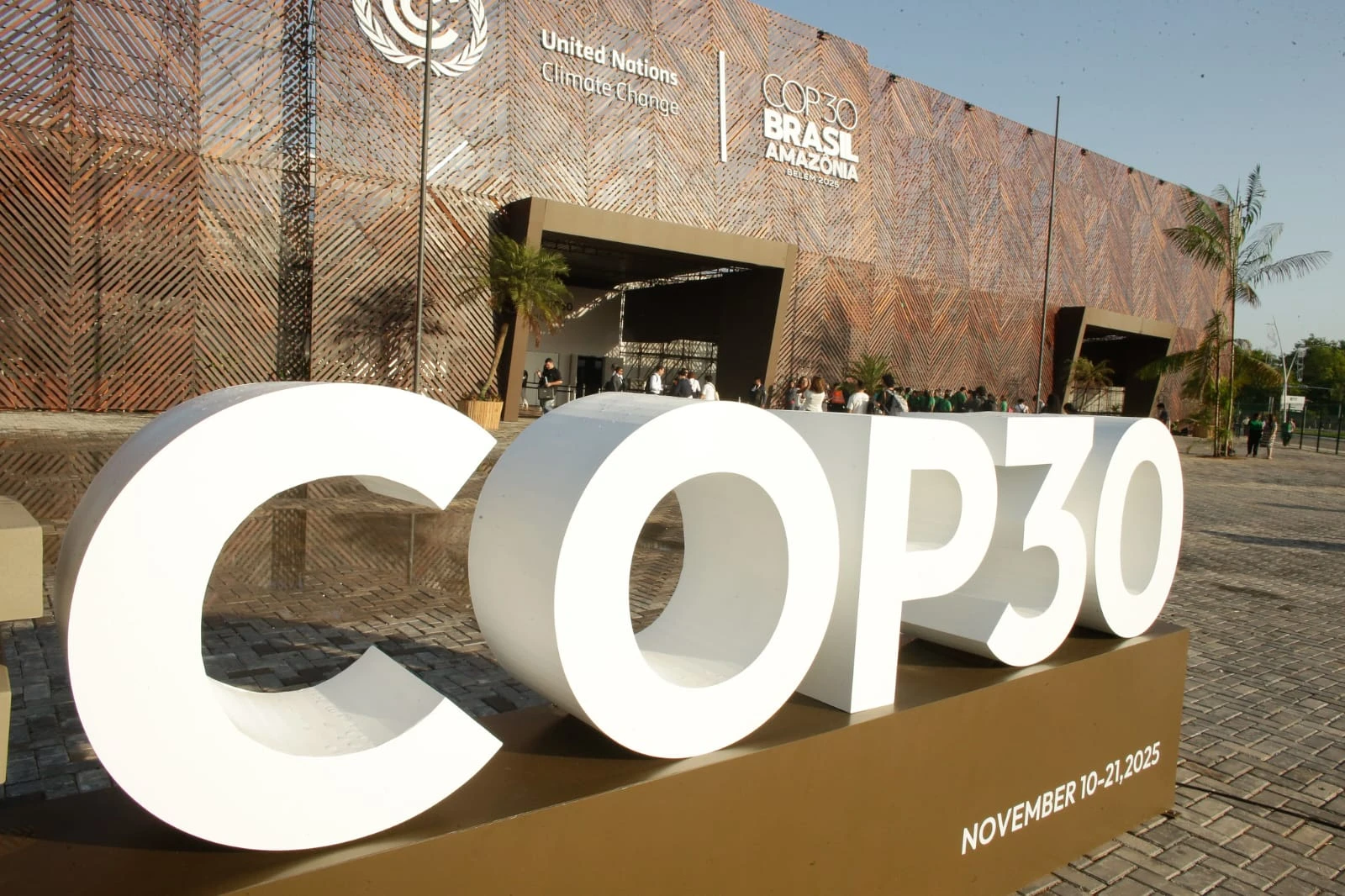
In November 2025, the world’s largest climate conference came to the world’s largest rainforest. What emerged from eleven days in Belém was more than a set of agreements. It was a recalibration.
Belém had never hosted an event of this magnitude. For eleven days in November 2025, nearly forty thousand delegates, ministers, scientists, and advocates gathered where the Amazon meets the sea, in a city that carries the weight of what is at stake in ways data alone cannot replicate. The consequences of climate change are not projections here. They show up in the waterline and the flooding streets. COP30 opened under the full weight of that geography, in a place that asked every delegation to reckon with what was actually at stake.
The conference marked the thirtieth session of the Conference of the Parties to the UNFCCC, and the first ever held within the Amazon biome. Brazil accepted the hosting role with clear political intent. For Indigenous leaders who travelled from territories far upstream, for the diplomats in rooms overlooking the river, and for the forest itself, the symbolism required no elaboration. The world’s most consequential remaining ecosystem was the argument.
Three agreements came to define the eleven days. The first was a long-awaited resolution on Article 6 of the Paris Agreement, the provision governing international carbon markets. After four consecutive COPs in which the talks had stalled or collapsed, Belém produced a workable framework. A centralised crediting mechanism will allow nations to trade certified emissions reductions, with independent oversight designed to guard against double-counting and preserve environmental integrity throughout.
For developing nations with large forest reserves, particularly across the Amazon basin, Central Africa, and Southeast Asia, the Article 6 resolution opened a channel of sustainable finance that had been blocked for years. Conservation-backed carbon credits, long promising in theory but unworkable in practice for lack of a credible market architecture, now have a structural foundation on which future climate finance can build.
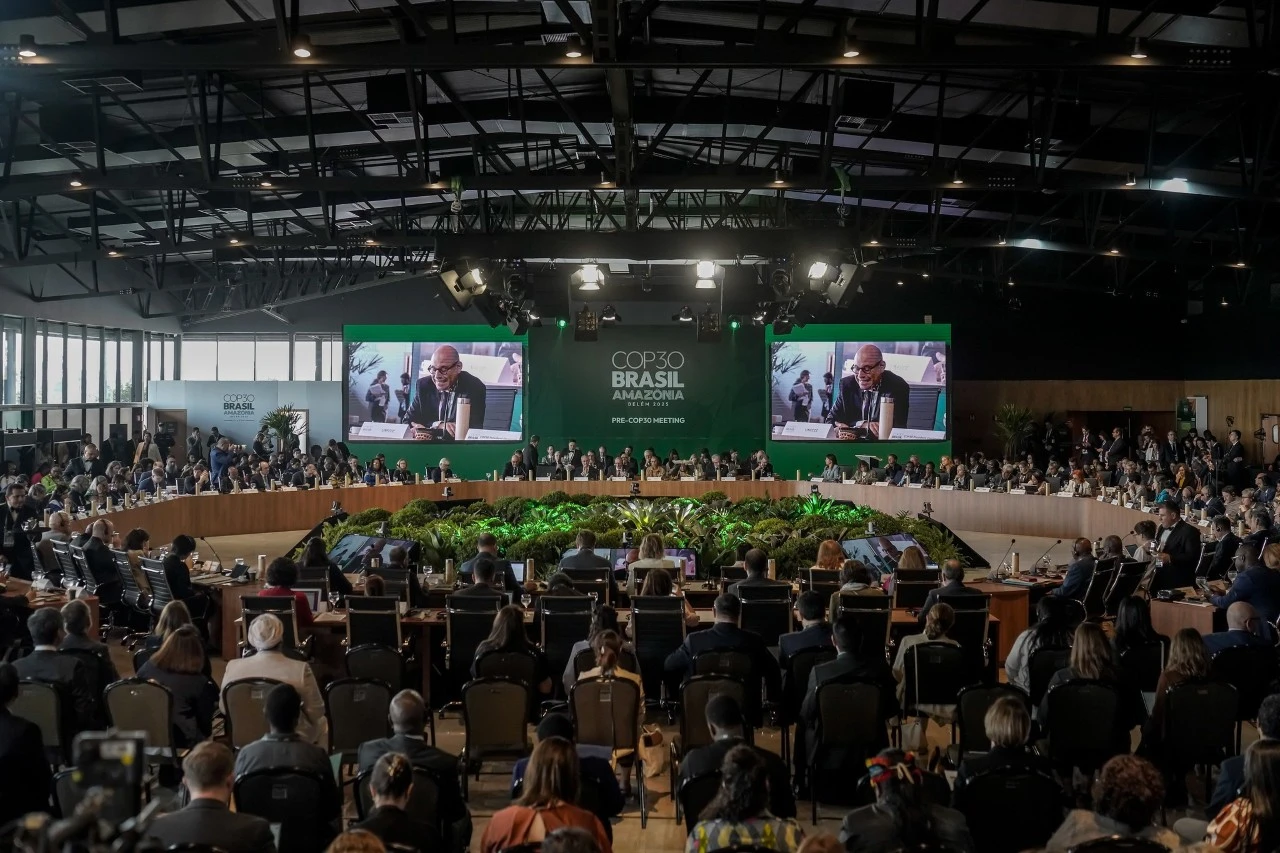
The second breakthrough concerned the Loss and Damage Fund. Established in principle at COP27 in Sharm el-Sheikh, the Fund had struggled through two subsequent conferences without the capital to become operational. In Belém, pledges exceeded sixty billion dollars, with contributions from the European Union, the United Kingdom, Germany, and several Gulf states not previously among its principal supporters.
The Fund is now fully operational, with a governing board in place and disbursement guidelines covering the forty-seven nations identified as most acutely vulnerable, spanning sub-Saharan Africa, South and Southeast Asia, and the Pacific. For many of them, it is the first institutional acknowledgment by major historical emitters of their responsibility for harms already experienced in harvests, coastlines, and communities that contributed almost nothing to cumulative global emissions.
The third pillar of the Belém package strengthened accountability for Nationally Determined Contributions, the country-level pledges forming the operational core of the Paris Agreement. Under the framework agreed, a peer assessment process gives the UNFCCC Secretariat a formal role in flagging nations whose targets fall significantly short of the collective pathway required by the science. Its adoption at Belém was, after years of resistance from several major economies, a genuine advance.
Beyond the headline agreements, the Belém Declaration on Tropical Forests attracted signatures from eighty-eight nations, committing collectively to halt the loss of primary forest cover by 2030. The Declaration includes countries that have historically resisted linking their domestic forest policies to international commitments, nations in which land conversion for agriculture and extractive industry makes such pledges politically costly. Indigenous leaders participated throughout in an official advisory capacity, with traditional ecological knowledge formally acknowledged in the text.
The Declaration carries no binding enforcement mechanism. Its significance rests on political commitment rather than legal obligation. Whether its eighty-eight signatories translate that commitment into measurable change will be the true test. A pledge made in a conference hall means something different from one reflected in land use law, in forest protection budgets, and in the decisions made by regional officials far from any international stage. The distance between signing and doing has always been the gap that environmental diplomacy struggles most to close.
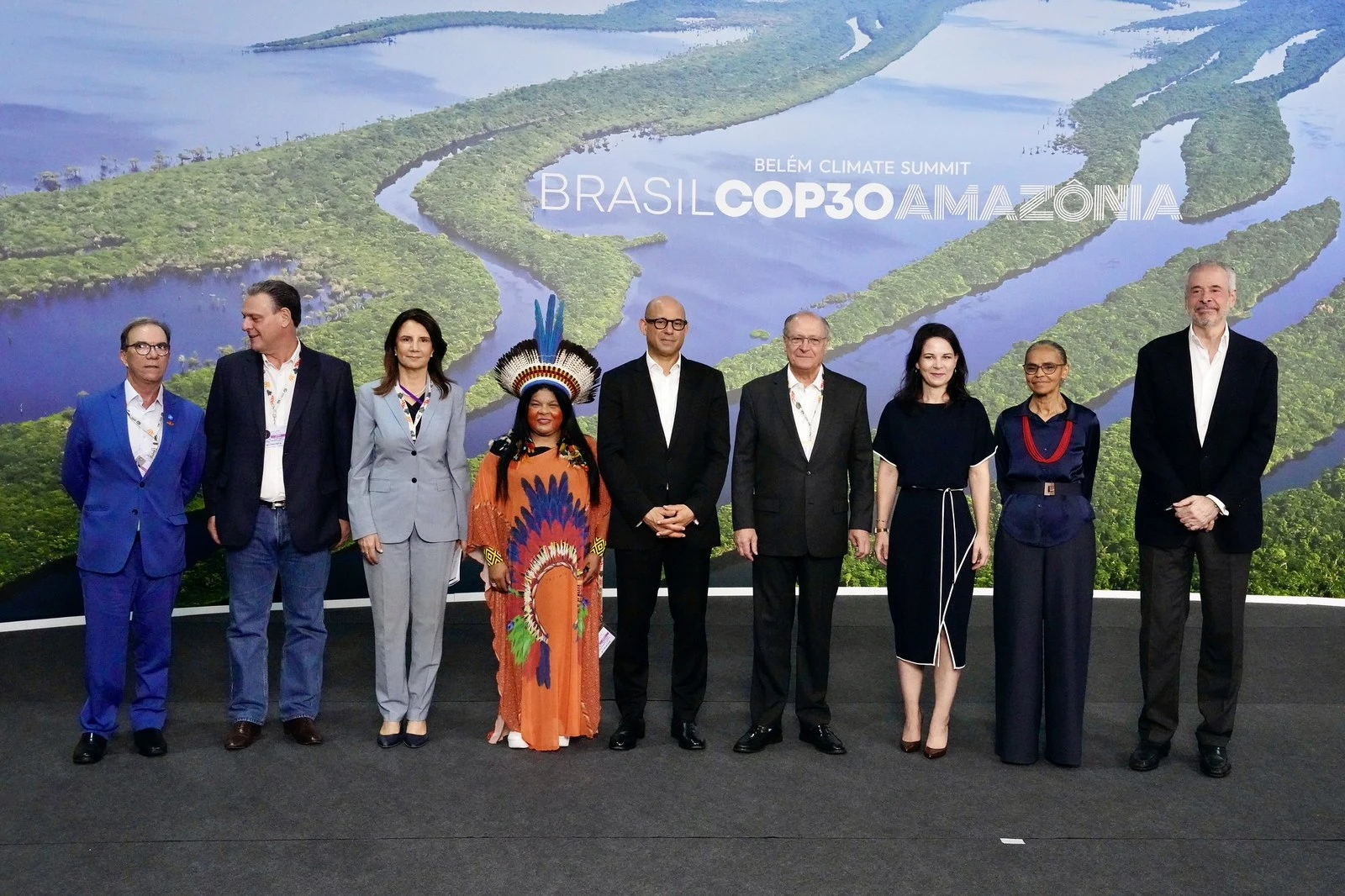
Reactions from the broader climate community reflected a conference that delivered more than many expected while still falling short of what the science demands. The mechanisms established in Belém are new and they are real, representing a meaningful advance on the state of international climate governance as it stood when the conference opened. At the same time, the aggregate NDC targets submitted ahead of COP30, even if fully implemented, still trace a warming trajectory that most climate scientists regard as dangerously inadequate.
That tension between international ambition and national delivery has defined every major climate conference since Paris. It is not a failure unique to Belém. It is the structural condition of multilateral climate diplomacy, in which the most ambitious outcomes require consensus from parties carrying profoundly different levels of historical responsibility, economic capacity, and political exposure to the costs of action. COP30 navigated that condition with more success than its immediate predecessors. That matters, even when the result still falls short of what the moment demands.
Another reading of Belém focuses on what the new architecture makes possible. A functioning carbon market with genuine environmental integrity opens financing channels that did not exist before. An operational Loss and Damage Fund transforms a moral argument into an institutional mechanism. A strengthened NDC review process creates accountability where there was previously only discretion. These are not substitutes for transformative ambition, but they are a platform from which such ambition must now be built rather than having to start again from nothing.
The question Belém could not answer is whether the political will to build from that platform will arrive before the window narrows further. The agreements represent a floor of adequacy rather than a ceiling of ambition. That floor is higher than it was before November 2025. But the distance between it and what the climate system actually requires remains the defining challenge of a generation that inherits both the consequences of accumulated inaction and the full responsibility for what comes next.
One of the quietly significant aspects of Belém was the visibility of young delegates in formal negotiating roles. Many nations, particularly across Africa, Southeast Asia, and the Pacific, included under-30 diplomats in their official delegations for the first time. The Youth Constituency at COP30 was the largest in the conference’s history, representing one hundred and forty-two countries. Its interventions during the Article 6 and Loss and Damage discussions were cited by several senior negotiators as genuinely useful, not symbolic gestures staged for press coverage.
The presence of young delegates in formal roles rather than the observer galleries reflects a longer-term shift in how some governments think about climate diplomacy. Climate agreements operate across time horizons that extend well beyond any single administration. The officials responsible for implementing the Belém frameworks in 2035 and 2040 are, in many cases, the young delegates who sat in the rooms where those frameworks were agreed. The institutional continuity that early inclusion creates is a resource that sensible governments are beginning to value seriously.
For many young people who have passed through IGN’s council chambers over the past decade, representing nations they had never visited, arguing positions shaped by weeks of research and preparation, the atmosphere in Belém carried a particular recognition. The language of the negotiations, the dynamics of bloc-building, the experience of holding a position under pressure and knowing when to hold and when to yield, these were not unfamiliar registers. They had been practised, seriously if imperfectly, in rooms very much like those in Belém.
The questions that occupied COP30, questions about the integrity of carbon markets, about the equity of a financial architecture designed before the full scale of the crisis was understood, about the right of communities on the front lines of warming to shape the decisions that determine their futures, are the same questions that have driven the most substantive debates in IGN’s environmental councils for years. The distance between a Model UN resolution and a UNFCCC agreement is real. It is also shorter than it appears.

COP30 did not solve the climate crisis. What it did, in a city at the mouth of the Amazon surrounded by the world’s most consequential living ecosystem, was demonstrate that the multilateral architecture of climate governance retains the capacity to produce meaningful agreement when the stakes demand it. For a generation already living with the consequences of accumulated inaction, and steadily moving into the institutions where those consequences will be negotiated, that demonstration may be the most important outcome of all.
COP30 in Belém produced a workable Article 6 framework for international carbon markets, an operational Loss and Damage Fund backed by pledges beyond sixty billion dollars, and a strengthened peer review of national climate pledges. The Belém Declaration on Tropical Forests drew signatures from eighty-eight nations. Together the agreements raise the floor of climate governance without yet meeting what the science demands.
You might also like
 Main Feature
The Most Polluting World Cup?
A neutral look at how travel and an ever larger tournament drive the carbon cost of the world's favourite game.
 Main Feature
The Quiet Casualty
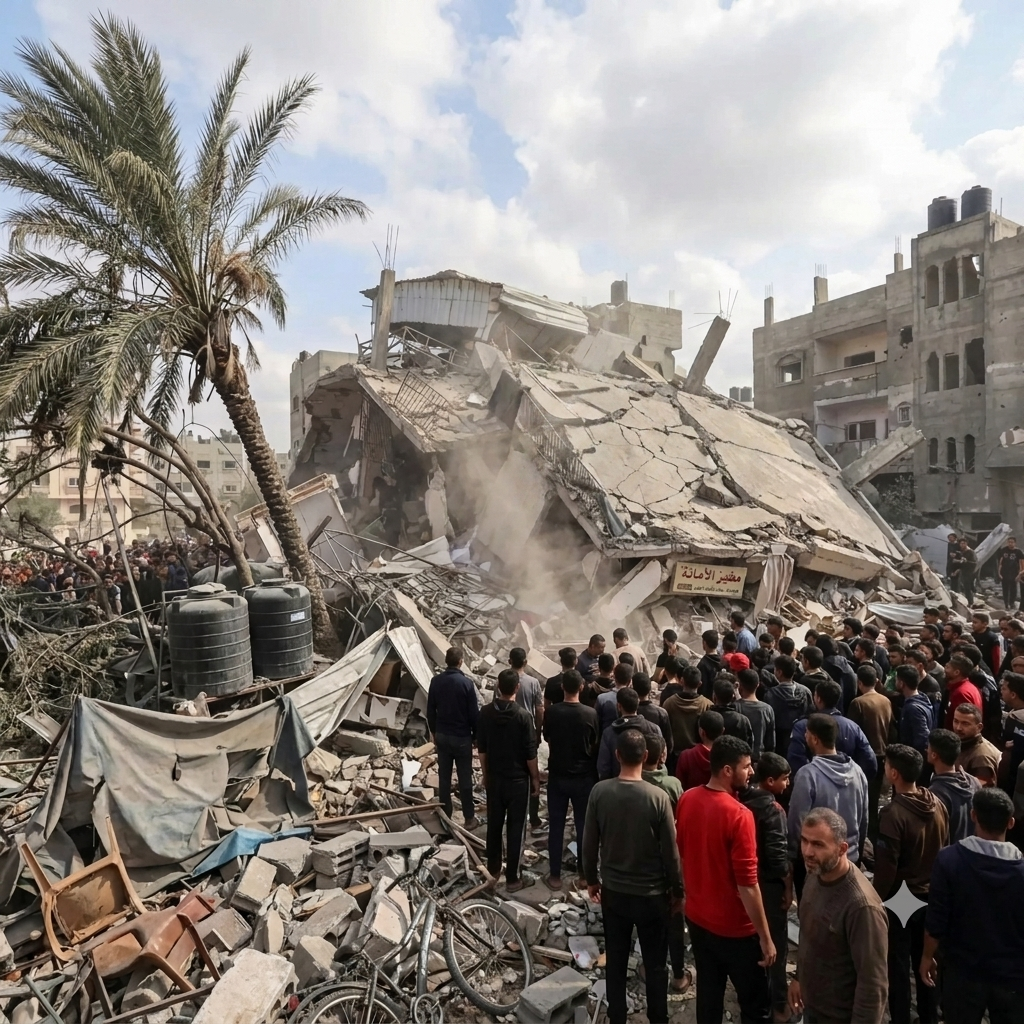
The environmental toll a conflict leaves behind, drawn from two United Nations assessments.
 Feature
The Best Halls in Asia
Inside the campuses drawing the region's students, and the culture that comes with a place at them.