
Whose Fault Was the Flood
Whose Fault
Was the
Flood?
A mountain fell in Nepal.
A continent has been flooding
for years. Nobody agrees
whose bill it is.

On the morning of 26 August the ground shook along the Nepal China border, and a seismometer logged the tremor as a magnitude 5.2 earthquake before correcting itself. A mass of bedrock and glacier ice had broken off a slope north of Langtang Lirung and fallen some four thousand feet into the valley beneath. The wave reached the border post at Gyirong in six or seven minutes. By the end of the month more than a thousand people were dead across Nepal and Tibet, and over four thousand were still missing.
Days later a lake pooled behind the debris and burst, sending the water through a second time.
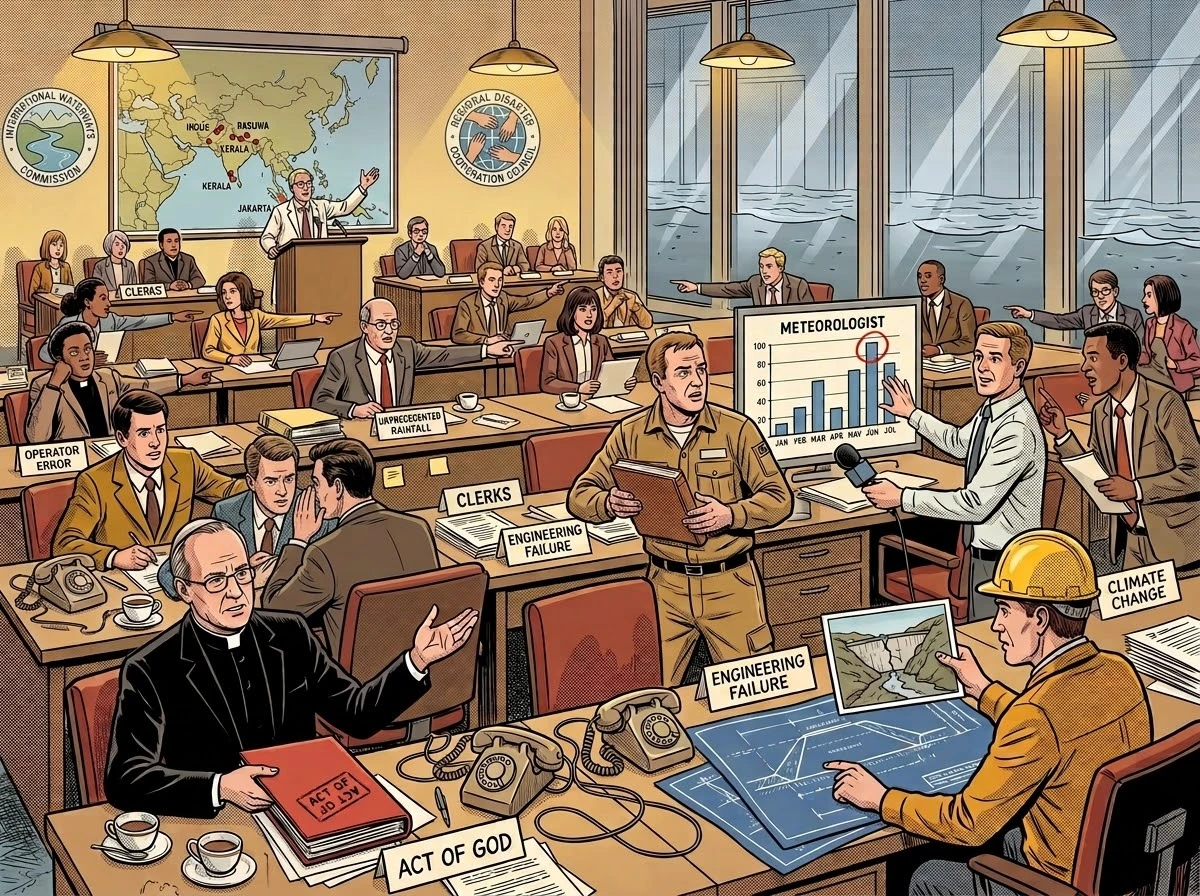
Within a week almost everyone had a culprit, and almost nobody had the same one. Some pointed at the glacier and the warming that loosened it. Some pointed at the highway and the border post built beneath it. Others said what officials in flooded countries have said for a century, that the event was beyond anyone's control. The arguing began before the searching finished, and it followed a script that has been running across Asia for a hundred years.
It is worth being precise about what a flood is. Water rising is a natural event, and in an empty valley it is only weather. What turns it into a disaster is the presence of people, and of the roads, ports and hotels put in its path. The rain is not the decision. The settlement is.
That distinction is why the blame question matters. After every major flood a society reaches for a culprit, and the culprit it reaches for is never neutral. Each name that gets chosen makes one conversation loud and another one quiet.
The loud one is about the immediate trigger. The quiet one is about who was permitted to build where, and it is the only conversation that would change the next flood.
The first culprit is the oldest. For most of the last century floods across the region were recorded as acts of God or, later, as natural disasters. If a flood is an accident of nature then nobody in an office signed for it and no minister has anything to answer. The category clears the room, and building on the flood plain continues.
Climate change is true, which makes it unarguable, and global, which makes it nobody’s jurisdiction.
The second culprit arrived with the concrete. The twentieth century answer to flooding in Asia was to build against it, with embankments along the Indus, polders in the delta and dams on almost every major Indian and Chinese river. The structures worked often enough to be believed in, and the belief is the dangerous part. Land behind an embankment is treated as safe land, and it fills with houses that would never have been built on an open flood plain. When the structure is eventually overtopped the blame falls on the structure, which is a way of calling the flood an engineering failure rather than a planning one.
The third culprit is more recent and more personal. When the structure holds but the water still arrives, the argument moves to the people operating it. Kerala in 2018 is the clearest case in the region. The Idukki gates were opened that August for the first time since 1992, the opposition called the floods a manmade disaster and demanded a judicial inquiry, and the row that followed was almost entirely about the timing of a decision taken over a few days. Barely discussed was what had happened in the twenty six years when no water was released, which is that the banks below the dam had filled with houses and farms. The gates made a better defendant than the encroachment.
The fourth culprit appears when there is nothing built to accuse. Then the rain itself goes on trial, and the vocabulary gives the move away. Unprecedented. Once in a century. A rain bomb. Pakistan in 2022 and Brisbane in the same year were both described in those terms by the people responsible for them. The trouble is that unprecedented now arrives every few years, and a flood that turns up three times in a decade is a forecast somebody has declined to act on.
Which brings the list to its newest entry. Climate change is real, and it is implicated in what happened above Langtang Lirung. It is also the most convenient defendant any government has been handed. It is true, so unarguable. It is global, so nobody's jurisdiction.
Underneath all five culprits sits the same undiscussed decision. Northern Jakarta is sinking and is still being built on. The Rasuwa corridor carried a highway through ground the hazard maps had marked. The exposure was legal, permitted and profitable, and somebody signed for it.
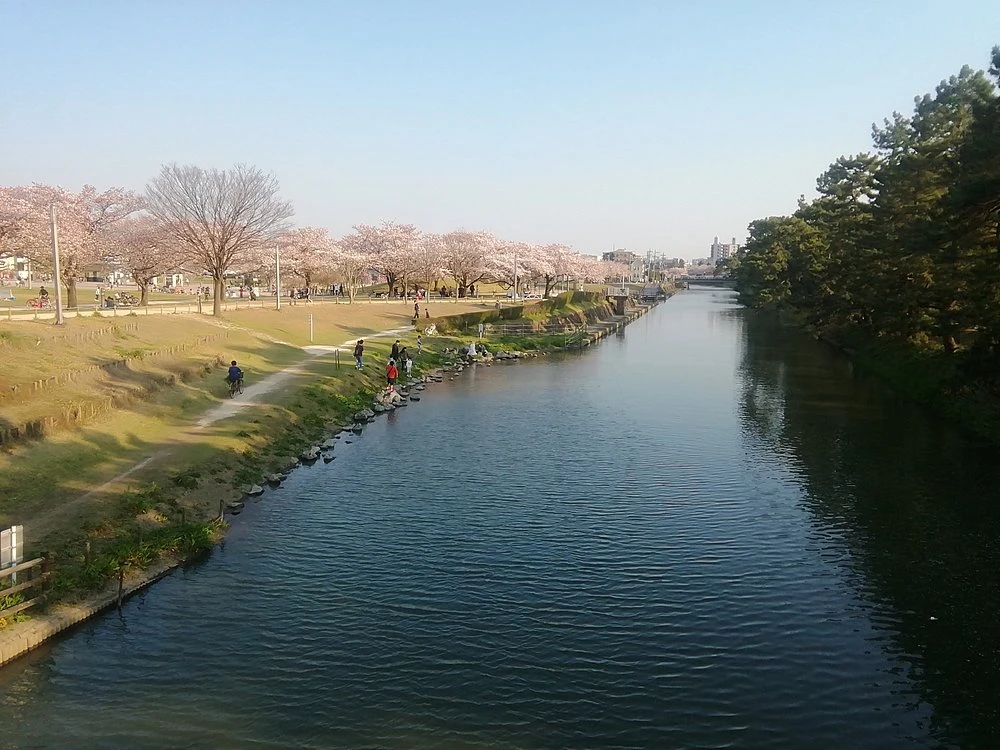
There is one basin where the argument stopped. North of Tokyo the Nakagawa and Ayase rivers run too flat to drain, and a typhoon put thirty thousand homes under water in 1991. Japan's answer took thirteen years and about two hundred and thirty billion yen. Officials put the fall in flood damage at around ninety per cent.
Nothing about it reduced the rainfall. Japan did not win the argument about blame and did not wait for anyone to finish it. It accepted the water was coming and decided in advance where it would go. So the question is not who was at fault for the water. It is who will be named next, and whether the generation that will sit in these rooms is willing to accept the answer?
You might also like
 Feature
The Best Halls in Asia
Inside the campuses drawing the region's students, and the culture that comes with a place at them.
 Feature
Are You What You Did
On achievement, identity, and the question that follows a student long after the results.
 Feature
Bellicia Pho
She had never once debated in English before her first virtual conference. A year on, she studies economics in Shanghai at a university that has outrun every expectation she brought to it.